Breach of Contract Basics: What Counts and What to Do
Contracts hold everyday agreements together, from renting an apartment to hiring a contractor. When one side does not do what they promised, it can be a breach of contract, but not every disappointment counts as one legally. Here is how to understand the basics, and what your options are when someone does not hold up their end of a deal.
What Makes an Agreement a Legal Contract
A valid contract generally needs an offer, acceptance of that offer, and something of value exchanged between both sides, called “consideration.” Contracts do not always need to be in writing to be enforceable, though written contracts are much easier to prove. Most states’ “statute of frauds” laws require certain agreements to be in writing to be enforceable at all, including real estate sales, contracts that cannot be performed within one year, and agreements to pay someone else’s debt.
What Counts as a Breach
A breach happens when one party fails to do what the contract requires, without a legal excuse. This can include not paying for goods or services received, not delivering what was promised, missing a required deadline, or doing something the contract specifically prohibits. Breaches are generally categorized as either material, meaning it defeats the whole purpose of the contract, or minor, meaning it is a smaller failure that does not undermine the entire agreement.
Every state sets a deadline, called a statute of limitations, for filing a breach of contract lawsuit, and it typically runs from the date of the breach. Written and oral (verbal) contracts often get different deadlines in the same state, and missing the deadline generally bars the claim entirely, no matter how strong it is.
| State | Written Contract | Oral Contract |
|---|---|---|
| California | 4 years (Cal. Civ. Proc. Code § 337) | 2 years (Cal. Civ. Proc. Code § 339) |
| Texas | 4 years (Tex. Civ. Prac. & Rem. Code § 16.004) | 4 years (Tex. Civ. Prac. & Rem. Code § 16.004) |
| New York | 6 years (N.Y. C.P.L.R. § 213) | 6 years (N.Y. C.P.L.R. § 213) |
| Florida | 5 years (Fla. Stat. § 95.11) | 4 years (Fla. Stat. § 95.11) |
These are examples only, not an exhaustive list. Deadlines and the written-versus-oral distinction vary by state, and some states measure the clock differently depending on the type of contract, so confirm the current statute in your state, ideally with an attorney, before assuming how much time you have left.
| Breach Type | What It Means | Typical Remedy |
|---|---|---|
| Material breach | Defeats the whole purpose of the contract | Cancel the contract and sue for damages |
| Minor breach | A smaller failure that does not undermine the agreement | Compensation for the actual loss caused |
Common Excuses That Are Not Legal Defenses
Simply changing your mind, running into financial trouble, or finding a better deal elsewhere are not valid legal excuses for breaking a contract. However, legitimate defenses do exist, such as the other party breaching first, the contract being impossible to perform due to unforeseen circumstances, or the contract itself being invalid due to fraud or a lack of legal capacity.
Steps to Take When a Contract Is Broken
What Damages You Can Recover
If a breach caused you financial loss, you can typically sue for damages that put you back in the position you would have been in if the contract had been honored. This might include the cost to hire someone else to finish the job, lost profits, or the value of goods you paid for but never received. Courts generally do not award damages for emotional distress in a standard breach of contract case.
When to Go to Small Claims Court
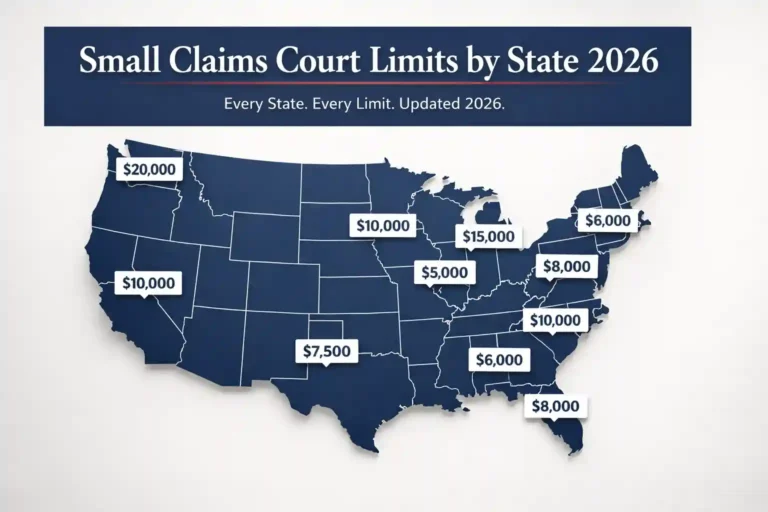
If the amount you are owed falls within your state’s small claims limit, you can often sue without a lawyer. For larger or more complicated disputes, especially those involving significant money or property, consulting a contract attorney before filing is worth the cost. See our guide on how to sue someone for the full step-by-step process.
Conclusion
Not every disappointing deal is a legal breach, but when the other side truly fails to deliver on what they promised, you have real options. Start with the contract itself, then documentation, then a written demand before ever thinking about court.
Most straightforward breach of contract disputes within your state’s small claims limit can be handled without a lawyer. Save the attorney consultation for larger sums or complicated agreements where the stakes justify the cost.
This article is for general information only and is not legal advice. Contract law varies by state, so consult a licensed attorney about your specific agreement and situation.
Frequently Asked Questions
Sources: Cal. Civ. Proc. Code § 337, Tex. Civ. Prac. & Rem. Code § 16.004, N.Y. C.P.L.R. § 213, Fla. Stat. § 95.11.