Plaintiff vs Defendant: Understand Both Sides of a Lawsuit (2026)
The plaintiff is the person who files the lawsuit. The defendant is the person being sued. That is the short answer. But if you are dealing with a real legal situation, or trying to truly understand how courts work, the short answer is just the beginning.
The difference between plaintiff and defendant goes far deeper than just labels. It shapes who carries the legal burden, who pays court costs, who speaks first at trial, what defenses are available, and what each side stands to gain or lose. In some cases, the same person can be both at the same time. In others, there are dozens of plaintiffs or defendants in a single lawsuit.
This is the most complete, guide you will find on plaintiff vs defendant. Whether you are a student, someone facing a legal dispute, a small business owner, or just curious about how courts work, this guide covers everything from basic definitions to advanced litigation strategy.
Plaintiff vs Defendant: Quick Comparison
The plaintiff is the party who files a lawsuit and seeks a legal remedy from the court. The defendant is the party who is sued and must respond to those claims. Here is how they compare across every key area:
|
Feature |
Plaintiff |
Defendant |
|---|---|---|
|
Role |
Sues another party |
Is being sued |
|
Position in case title |
First name listed |
Second name listed |
|
Who initiates the case |
Yes |
No |
|
Goal in the lawsuit |
Win a remedy such as money or a court order |
Get case dismissed or reduce liability |
|
Burden of proof |
Yes, must prove their case |
No formal burden, must challenge plaintiff’s evidence |
|
Standard of proof (civil) |
Preponderance of evidence, more likely than not |
No set standard, must prevent plaintiff from meeting theirs |
|
Files the complaint |
Yes |
No |
|
Files the answer |
No |
Yes |
|
Filing fees |
Pays at the start |
Usually does not pay filing fees |
|
Can file a counterclaim |
Not at the start |
Yes, very common |
|
Risk if they lose |
No remedy granted, may pay court costs |
Must pay damages or comply with court order |
|
Can represent themselves |
Yes, called pro se |
Yes, called pro se |
|
Can be a corporation |
Yes |
Yes |
|
Speaks first at trial |
Yes |
No, responds after plaintiff |
|
Common legal strategy |
Build strong evidence of harm and causation |
Challenge evidence, raise affirmative defenses, or countersue |
What Is a Plaintiff? Full Definition and Role
A plaintiff is the party who initiates a civil lawsuit. They are the one who believes they have been wronged, harmed, or damaged by another party and is asking a court to provide relief. The plaintiff kicks off the entire legal process by filing a formal complaint with a court that has jurisdiction over the matter. Also read our guide how to sue someone?
The word “plaintiff” comes from the Old French word plaintif, meaning one who complains. That origin actually captures the role perfectly. The plaintiff is literally the complaining party in a legal action.
Who Can Be a Plaintiff?
What the plaintiff does throughout the case:
The plaintiff’s name always appears first in the case title. In Johnson v. Williams, Johnson is the plaintiff. In Apple Inc. v. Samsung Electronics Co., Apple was the plaintiff.
What Is a Defendant? Full Definition and Role
A defendant is the party being sued. They are on the receiving end of the plaintiff’s complaint and must respond to the allegations made against them. The defendant does not choose to be in court. They are brought in by the plaintiff’s decision to file a lawsuit.
The word “defendant” comes from the Latin defendere, meaning to ward off or protect. Again, the origin fits perfectly. The defendant’s job is to ward off the plaintiff’s claims.
Who Can Be a Defendant
What the Defendant Does Throughout The Case
The Full Legal Process: Step by Step for Both Parties
Understanding the complete journey of a lawsuit from start to finish shows how the plaintiff and defendant interact at every single stage.
Step 1: Pre-Filing Investigation
Before the plaintiff even files a lawsuit, a good attorney will investigate the facts, research applicable law, identify potential defendants, assess the strength of the claim, and calculate potential damages. This stage is invisible to the defendant unless settlement talks happen first.
Step 2: Filing the Complaint
The plaintiff files a written document called a complaint with the appropriate court. This document contains:
Step 3: Service of Process
The defendant must be formally notified of the lawsuit through a procedure called service of process. Simply emailing someone or posting on social media is not sufficient. Proper service typically involves:
Without proper service, the court does not have personal jurisdiction over the defendant and the case cannot proceed.
Step 4: The Defendant’s Answer
After being served, the defendant must respond to the complaint by filing an answer. The deadline is:
|
Court Type |
Response Deadline |
|---|---|
|
Federal court |
21 days after service |
|
California state court |
30 days after service |
|
New York state court |
20 days (personal service) or 30 days (other service) |
|
Texas state court |
Monday after 20 days from service |
|
Florida state court |
20 days after service |
In the answer, the defendant must respond to every single allegation in the complaint by admitting it, denying it, or stating they lack sufficient knowledge to admit or deny it.
Step 5: Affirmative Defenses and Counterclaims
Along with the answer, the defendant may:
Step 6: Motions to Dismiss
Before the case moves to full discovery, the defendant may file a motion to dismiss arguing that:
If the judge grants the motion to dismiss, the case ends before discovery or trial.
Step 7: Discovery
Discovery is the phase where both parties exchange information. It is often the longest and most expensive part of litigation. Discovery tools include:
Both the plaintiff and defendant have equal rights to conduct discovery, though the plaintiff typically goes first since they bear the burden of proof.
Step 8: Pre-Trial Motions
After discovery closes, either party can file pre-trial motions asking the judge to make legal rulings before trial. The most significant is the motion for summary judgment, which argues that the undisputed facts already establish who should win and no trial is needed.
Other common pre-trial motions include:
Step 9: Settlement Negotiations and Alternative Dispute Resolution
Before the case reaches trial, courts often require the parties to attempt settlement. Methods include:
Statistically, roughly 95 to 97 percent of civil cases in the US resolve without a full trial. Settlements save time, money, and the uncertainty of leaving the outcome in the hands of a jury.
Step 10: Trial
If no settlement is reached, the case goes to trial. The trial process follows a predictable structure:
Step 11: Judgment
After a verdict is reached, the court enters a formal judgment. If the plaintiff wins, the judgment specifies what the defendant owes or must do. If the defendant wins, the case is dismissed with judgment in their favor.
Step 12: Post-Trial Motions and Appeals
Either party can challenge the outcome:
Appeals courts do not retry the facts of the case. They only review whether the law was correctly applied.
Step 13: Enforcement of Judgment
Winning a judgment is not the same as collecting money. If the defendant does not voluntarily pay, the plaintiff may need to enforce the judgment through:
Types of Civil Cases and Who Plays Each Role
Personal Injury Lawsuits
Personal injury is one of the most common categories of civil litigation in the United States. It covers situations where one person’s negligence causes physical or emotional harm to another.
Common personal injury scenarios:
|
Scenario |
Plaintiff |
Defendant |
|---|---|---|
|
Car accident |
Injured driver |
At-fault driver |
|
Slip and fall |
Injured customer |
Property owner or business |
|
Medical malpractice |
Patient |
Doctor, hospital, or healthcare provider |
|
Product liability |
Injured consumer |
Manufacturer or retailer |
|
Dog bite |
Bite victim |
Dog owner |
|
Construction accident |
Injured worker |
Contractor or property owner |
Contract Disputes
When parties disagree about whether a contract was formed, what it means, or whether it was breached, one party becomes the plaintiff and the other the defendant.
Examples:
Employment Litigation
Employment lawsuits are among the fastest-growing categories of civil litigation. Employees can sue employers for:
In these cases, the employee is typically the plaintiff and the employer is the defendant, though employers can also sue employees for breach of non-compete agreements or theft of trade secrets.
Landlord-Tenant Disputes
|
Situation |
Plaintiff |
Defendant |
|---|---|---|
|
Unpaid rent |
Landlord |
Tenant |
|
Security deposit not returned |
Tenant |
Landlord |
|
Habitability issues |
Tenant |
Landlord |
|
Property damage |
Landlord |
Tenant |
|
Illegal eviction |
Tenant |
Landlord |
Intellectual Property Cases
Companies and individuals sue over patents, trademarks, copyrights, and trade secrets regularly. Famous examples include Apple suing Samsung over smartphone patents and Oracle suing Google over Java APIs.
Class Action Lawsuits
A class action is a special type of lawsuit where a large group of people with similar claims sues a defendant together. One or a few named plaintiffs represent the entire class.
Common class action scenarios:
The advantage for plaintiffs is strength in numbers. The advantage for defendants is resolving thousands of potential claims in a single proceeding.
Burden of Proof: The Most Important Legal Concept
The burden of proof is arguably the single most important concept separating the plaintiff from the defendant in any legal case.
In Civil Cases
The plaintiff must prove their case by a preponderance of the evidence. This means the plaintiff’s version of events must be more likely true than not. Lawyers often describe this as a 51% threshold. If the scales of justice tip even slightly in the plaintiff’s favor, they win.
In Criminal Cases
The prosecution must prove guilt beyond a reasonable doubt. This is a much higher and more demanding standard. It does not mean absolute certainty, but it means the jury must be firmly convinced of guilt with no reasonable alternative explanation.
Intermediate Standards
Some cases use a middle standard called clear and convincing evidence, which requires more certainty than a preponderance but less than beyond a reasonable doubt. This standard applies in cases such as fraud claims in civil court, termination of parental rights, civil commitment proceedings, and some defamation cases involving public figures.
|
Standard |
Level of Certainty |
Where It Applies |
|---|---|---|
|
Preponderance of evidence |
More likely than not (51%+) |
Most civil cases |
|
Clear and convincing evidence |
Substantially more likely than not |
Fraud, parental rights, some civil cases |
|
Beyond a reasonable doubt |
Near certainty, no reasonable doubt |
Criminal prosecutions |
|
Probable cause |
Reasonable basis to believe |
Arrests, search warrants |
|
Reasonable suspicion |
Specific articulable facts |
Police stops |
Affirmative Defenses Available to Defendants
An affirmative defense is a legal argument the defendant raises that can defeat or reduce the plaintiff’s claim even if the plaintiff’s facts are entirely true. The defendant bears the burden of proving affirmative defenses.
Complete Defenses (Eliminate Liability Entirely)
Partial Defenses (Reduce but Do Not Eliminate Liability)
Damages: What the Plaintiff Can Win and What the Defendant Can Lose
If the plaintiff wins, the court can award several types of damages.
Compensatory Damages
These are designed to make the plaintiff whole by compensating for their actual losses. They are divided into economic damages and non-economic damages.
Economic damages (also called special damages):
Non-economic damages (also called general damages):
Punitive Damages
Punitive damages go beyond compensation. They are designed to punish the defendant for particularly egregious, malicious, or reckless conduct and to deter others from similar behavior. They are not available in every case. Most states require proof of intentional misconduct or gross negligence.
Nominal Damages
When a plaintiff proves their rights were violated but cannot prove actual financial harm, a court may award nominal damages, often just one dollar, as a symbolic acknowledgment that the defendant acted wrongly.
Injunctive Relief
Instead of money, the plaintiff may seek a court order telling the defendant to do something or stop doing something. Examples include ordering a company to stop using a trademarked logo, ordering a former employee to stop violating a non-compete agreement, and ordering a neighbor to remove a fence built on the plaintiff’s property.
Restitution
The court orders the defendant to return a benefit they wrongfully obtained from the plaintiff. For example, returning money paid under a fraudulent contract.
Statutes of Limitations: Deadlines That Change Everything
A statute of limitations is the legal deadline by which the plaintiff must file their lawsuit. If they miss the deadline, the defendant can raise the statute of limitations as an affirmative defense and the case will almost certainly be dismissed, regardless of how strong the plaintiff’s claim is.
|
Type of Claim |
Typical Statute of Limitations (US) |
|---|---|
|
Personal injury |
2 to 3 years (varies by state) |
|
Medical malpractice |
2 to 3 years from discovery of harm |
|
Breach of written contract |
4 to 6 years |
|
Breach of oral contract |
2 to 4 years |
|
Fraud |
3 to 6 years from discovery |
|
Defamation (libel/slander) |
1 to 3 years |
|
Property damage |
3 to 5 years |
|
Federal civil rights claims (Section 1983) |
Usually the state’s personal injury statute |
|
Products liability |
2 to 4 years |
The clock typically starts running from the date of the injury or harm. However, the discovery rule applies in some cases, meaning the clock does not start until the plaintiff knew or reasonably should have known about the harm. This is especially common in medical malpractice and fraud cases.
Jurisdiction: Where the Lawsuit Must Be Filed
Not every court can hear every case. The plaintiff must file in a court that has proper jurisdiction, otherwise the case can be dismissed before it even starts.
Subject Matter Jurisdiction
This refers to whether a court has the authority to hear a particular type of case. Federal courts hear cases involving federal law, constitutional questions, cases between citizens of different states where the amount in controversy exceeds $75,000 (called diversity jurisdiction), and cases where the US government is a party. State courts hear most civil cases including personal injury, contract disputes, family law, and real estate matters.
Personal Jurisdiction
The court must also have authority over the defendant specifically. Generally, a court has personal jurisdiction over a defendant if the defendant lives or is based in that state, the defendant committed the act in question in that state, the defendant does substantial business in that state, or the defendant consented to jurisdiction there.
Venue
Even within the correct court system, the case must be filed in the right geographic location. Venue rules typically require filing where the dispute arose or where the defendant lives or does business. A defendant can request a change of venue if the chosen location is improper or if local publicity would prevent a fair trial.
Plaintiff and Defendant in Specific Court Systems
Small Claims Court
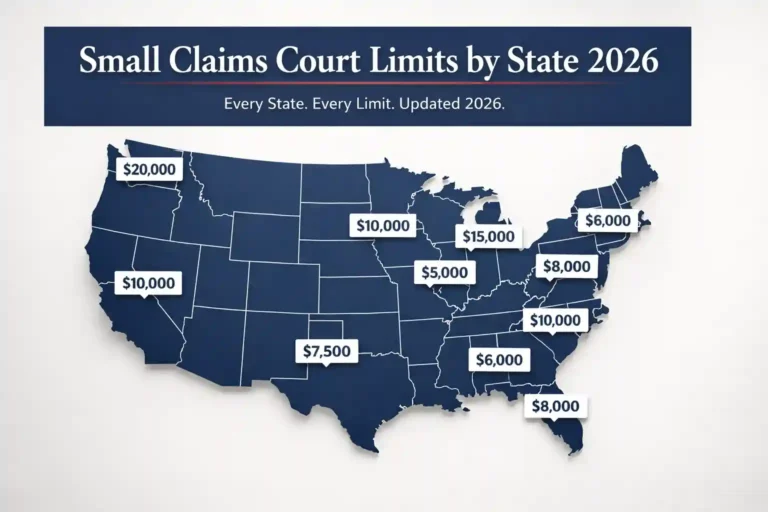
Small claims court is designed for ordinary people to resolve minor disputes without hiring an attorney. Each state sets its own limit on how much money can be claimed.
|
State |
Small Claims Limit |
|---|---|
|
California |
$12,500 |
|
Texas |
$20,000 |
|
New York |
$10,000 |
|
Florida |
$8,000 |
|
Illinois |
$10,000 |
In small claims court, the procedures are simplified, discovery is minimal or nonexistent, and the plaintiff and defendant often represent themselves. The judge typically decides the case on the same day.
Bankruptcy Court
In bankruptcy proceedings, the debtor is not exactly a plaintiff or defendant in the traditional sense. However, when creditors challenge a debtor’s right to discharge certain debts, or when a bankruptcy trustee sues to recover assets, the traditional plaintiff-defendant framework applies within the bankruptcy case.
Family Court
Family courts handle divorce, child custody, child support, adoption, and domestic violence matters. The terminology varies by state:
|
Traditional Terminology |
Family Court Equivalent |
|---|---|
|
Plaintiff |
Petitioner |
|
Defendant |
Respondent |
|
Complaint |
Petition |
|
Answer |
Response or counter-petition |
Federal Court System
Federal courts follow the Federal Rules of Civil Procedure, which set uniform standards for how plaintiffs and defendants must conduct themselves in federal litigation. Federal cases tend to be more complex, more expensive, and take longer than state court cases.
What Happens When There Are Multiple Plaintiffs or Defendants
Real-world litigation frequently involves more than two parties.
Multiple Plaintiffs
When multiple people are harmed by the same defendant in similar ways, they may join their claims in a single lawsuit under a legal doctrine called joinder. This is common in mass tort cases like opioid litigation or asbestos cases, class action lawsuits, and accidents involving multiple victims.
Multiple Defendants
A plaintiff can sue several defendants at once if they all contributed to the harm. The court will then determine how liability is allocated among them.
Joint and several liability means each defendant can be held responsible for the entire judgment, not just their proportional share. So if one defendant is judgment-proof (has no money), the plaintiff can collect the full amount from the other defendants.
Several liability means each defendant only pays their proportional share of fault.
Third-Party Practice
A defendant who believes someone else is actually responsible for the plaintiff’s harm can file a third-party complaint bringing that new party into the lawsuit. That new party is called a third-party defendant. This is extremely common in construction defect cases where a general contractor brings in subcontractors as third-party defendants.
Emotional and Practical Realities of Being a Plaintiff or Defendant
Beyond the legal mechanics, being involved in a lawsuit is a real-life experience with emotional and financial weight.
The Reality of Being a Plaintiff
Advantages:
Challenges:
The Reality of Being a Defendant
Advantages:
Challenges:
Famous Cases That Illustrate Plaintiff and Defendant Roles
Liebeck v. McDonald’s Restaurants (1994)
Stella Liebeck (plaintiff) sued McDonald’s (defendant) after suffering third-degree burns from excessively hot coffee. The case is often mischaracterized as frivolous, but evidence showed McDonald’s had received hundreds of prior burn complaints and continued serving coffee at dangerously high temperatures. The jury awarded Liebeck $2.7 million in punitive damages, later reduced by the judge.
Brown v. Board of Education (1954)
Oliver Brown and other plaintiffs sued the Board of Education of Topeka, Kansas (defendant) challenging racial segregation in public schools. The US Supreme Court ruled unanimously in favor of the plaintiffs, ending legally mandated school segregation.
Apple Inc. v. Samsung Electronics Co. (2011)
Apple (plaintiff) sued Samsung (defendant) for patent and trademark infringement related to smartphone design. The case resulted in a verdict of over $1 billion in Apple’s favor, later adjusted by the courts in subsequent proceedings.
Grimshaw v. Ford Motor Co. (1981)
Richard Grimshaw (plaintiff) sued Ford Motor Company (defendant) after a Ford Pinto exploded in a rear-end collision. The jury awarded both compensatory and punitive damages after evidence showed Ford had known about the fuel tank defect and calculated it was cheaper to pay lawsuits than to fix the design.
Key Legal Terms Every Plaintiff and Defendant Should Know
|
Term |
Definition |
|---|---|
|
Complaint |
The document the plaintiff files to start a lawsuit |
|
Answer |
The defendant’s formal response to the complaint |
|
Summons |
The official notice to the defendant that a lawsuit has been filed |
|
Service of process |
The formal delivery of legal papers to the defendant |
|
Discovery |
The pre-trial exchange of information between parties |
|
Deposition |
Sworn out-of-court testimony used in discovery |
|
Interrogatories |
Written questions one party sends to another during discovery |
|
Motion to dismiss |
A request to throw out the case before trial |
|
Summary judgment |
A ruling that one party wins without needing a trial |
|
Counterclaim |
A claim the defendant files against the plaintiff |
|
Cross-claim |
A claim between co-defendants in the same lawsuit |
|
Affirmative defense |
A defense that can defeat the plaintiff’s claim even if true |
|
Statute of limitations |
The filing deadline for a lawsuit |
|
Burden of proof |
The obligation to prove one’s claims in court |
|
Preponderance of evidence |
The civil standard of proof, more likely than not |
|
Punitive damages |
Extra damages to punish egregious conduct |
|
Injunctive relief |
A court order to do or stop doing something |
|
Default judgment |
A ruling against the defendant for failing to respond |
|
Pro se |
Representing yourself without an attorney |
|
Res judicata |
A prior judgment bars the same claim from being relitigated |
|
Voir dire |
The jury selection process |
|
Mediation |
Voluntary negotiation with a neutral third-party mediator |
|
Arbitration |
A private dispute resolution process outside of court |
|
Class action |
A lawsuit by a large group of plaintiffs with similar claims |
|
Joinder |
Adding additional parties or claims to a lawsuit |
|
Venue |
The geographic location where a case is filed |
|
Jurisdiction |
A court’s authority to hear a case |
|
Settlement |
A voluntary agreement between the parties to resolve the dispute |
Conclusion
The roles of plaintiff and defendant sit at the foundation of every lawsuit filed in the United States. The plaintiff brings the claim, carries the burden of proof, and seeks a remedy. The defendant receives the claim, challenges the evidence, and presents a defense. Both sides have substantial rights that the legal system is designed to protect equally.
Understanding these roles does not just satisfy intellectual curiosity. If you are ever involved in a dispute that could lead to litigation, knowing whether you are the plaintiff or the defendant, what each role requires, what deadlines apply, and what your rights are can make a meaningful difference in the outcome. Legal knowledge is not just for lawyers. It is a practical life skill.
If you are facing a real legal situation, always consult a licensed attorney in your state. Laws vary by jurisdiction and the facts of every case are unique. No blog post, however thorough, replaces qualified legal advice tailored to your specific circumstances.
Frequently Asked Questions